
Let's Make an Iran Deal
What we know so far about the U.S. strategy for ending the war with Iran looks and sounds an awful lot like something Trump called one of the "worst and dumbest deals ever made."

A Memorandum of Understanding (MOU) has been signed between the United States and Iran to open a 60-day period of negotiations for a final settlement of the war. As of this writing, the Iranians and Pakistanis have leaked their versions of the MOU, while the United States has not, vowing to do so in a matter of days. White House PR, in customarily contradictory fashion, is both heralding a new dawn in the Middle East while cautioning that it’s still early days and a lot of points have yet to be litigated and ironed out. As the unnamed Hollywood partygoer in Annie Hall says: “Right now it’s only a notion, but I think I can get money to make it into a concept and later turn it into an idea.”
Assuming this is the beginning of the end of Operations Epic Fury and Roaring Lion, to give the American and Israeli names for this joint campaign, we can assess that of the four stated operational objectives — ending Iran’s missile program, nuclear program, patronage of terrorist proxies, and its navy — only the last has been achieved.
One might quibble over U.S. intelligence assessments about how much of a missile program Iran has got left. On May 12, the New York Times reported that Iran retains “about 70%” of its mobile launchers and “roughly 70%” of its prewar stockpile of missiles, and “restored operational access to 30 of the 33 missile sites” along the Strait of Hormuz. The Israelis reckon more of the program was degraded than that, but even they concede not all of it was. Moreover, on June 13, everyone was waiting for Tehran to fire missiles at Israel in retaliation for Israeli attacks on Hezbollah in Lebanon. That Iran even has any missiles left capable of hitting Israel is rather a tell; as is the fact the U.S. hit back the other day, for the downing of an Apache helicopter with a Shahed drone, by targeting Iranian air defense and radar systems meant to have been destroyed already.
The more grandiose claim made for the U.S.-Israeli war was that it meant to foment regime change using a mixture of aerial bombardment, a Kurdish-orchestrated insurgency and the installation of former Iranian president Mahmoud Ahmadinejad, evidently a recruited Mossad agent, as a new satrap in Tehran. “Unconditional surrender,” Trump posted to TruthSocial post on March 6, which is far from the case on June 15. Trump has since taken to saying that the regime has been changed simply by assassinating recalcitrant senior figures, including Supreme Leader Ali Khamenei, only to see lower cadres rise to take their place. The Islamic Revolutionary Guard Corps is now in firmer control of the country than it was before the war, meaning that the guardianship of the Islamic jurist has given way to the racket of the junta, with the IRGC estimated to control half of Iran’s economy.
A little artful revisionism may allow some to cheerleaders to claim regime change was always more nice-to-have long-shot, but David Barnea, the recently retired Mossad director, certainly didn’t think of it that way, judging by this piece in the Jerusalem Post, citing senior Mossad officials (of whom Barnea was almost certainly one). “Israel was prepared to provide the Kurds not only with a no-fly zone,” the newspaper reported, “but with continuous aerial firepower to help them advance against any Iranian force that would have tried to assemble to block their path forward.”
While it may be too soon to cast a definitive judgment on how this war truly culminates and how it may reshape the balance of power in the region, a few things can be gleaned from a White House that runs not on standard protocols of statecraft but rather on the temperament and whims of an unstable and erratic president.
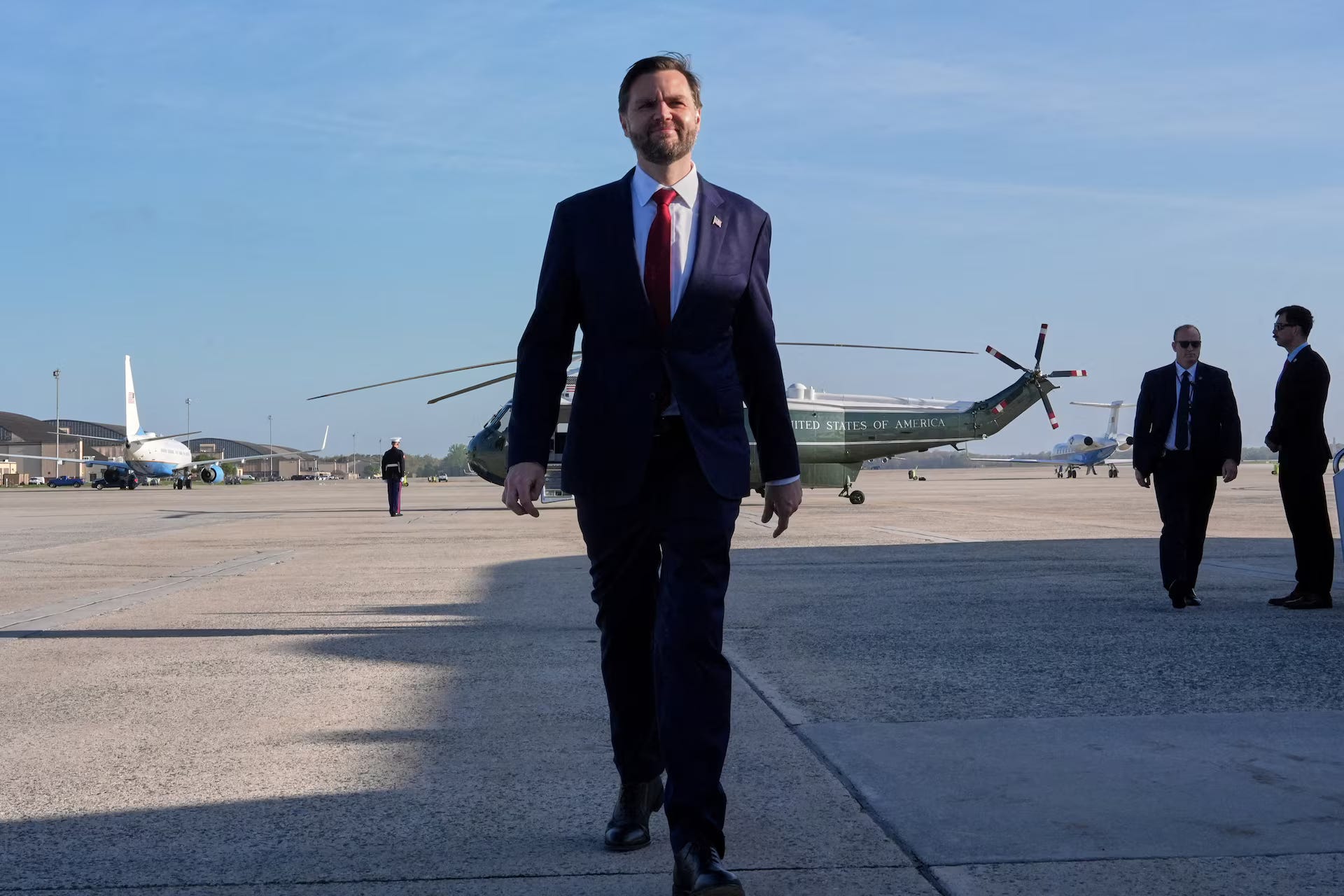
First, it’s quite obvious Trump wanted out of his own campaign badly and as quickly as possible and he empowered J.D. Vance, who was never in favor of going to war with Iran, to get him there. Vance is the “architect” of whatever preliminary agreement has been struck, per Lindsey Graham, and that means stateside Iran hawks want the vice president to own whatever comes next. I think it is safe to assume they’re counting on what comes next being an unmitigated disaster for the United States.
One clue in what to expect is that Vance’s sales pitch for the MOU now mirrors uncannily how the Obama administration peddled the Joint Comprehensive Plan of Action (JCPOA) in 2015 to limit but not end Iran’s nuclear program, policy virtually all of the Republican Party at the time rejected, and which Trump denounced serially before, during and after his first term in office. The agreement, Trump has called, “one of the worst and dumbest deals ever made.”
